
Understanding Trencher Chains
Trencher chain assemblies are critical wear parts that determine your equipment’s performance in the field. Whatever your industry, selecting the right trencher chain means less downtime and longer equipment life.
With multiple manufacturers, varied machine models, different pitch sizes, and diverse ground conditions, identifying the correct trencher chain assembly requires specific information. This trencher chain guide simplifies that process.
WHAT INFORMATION DO YOU NEED?
Quick Overview
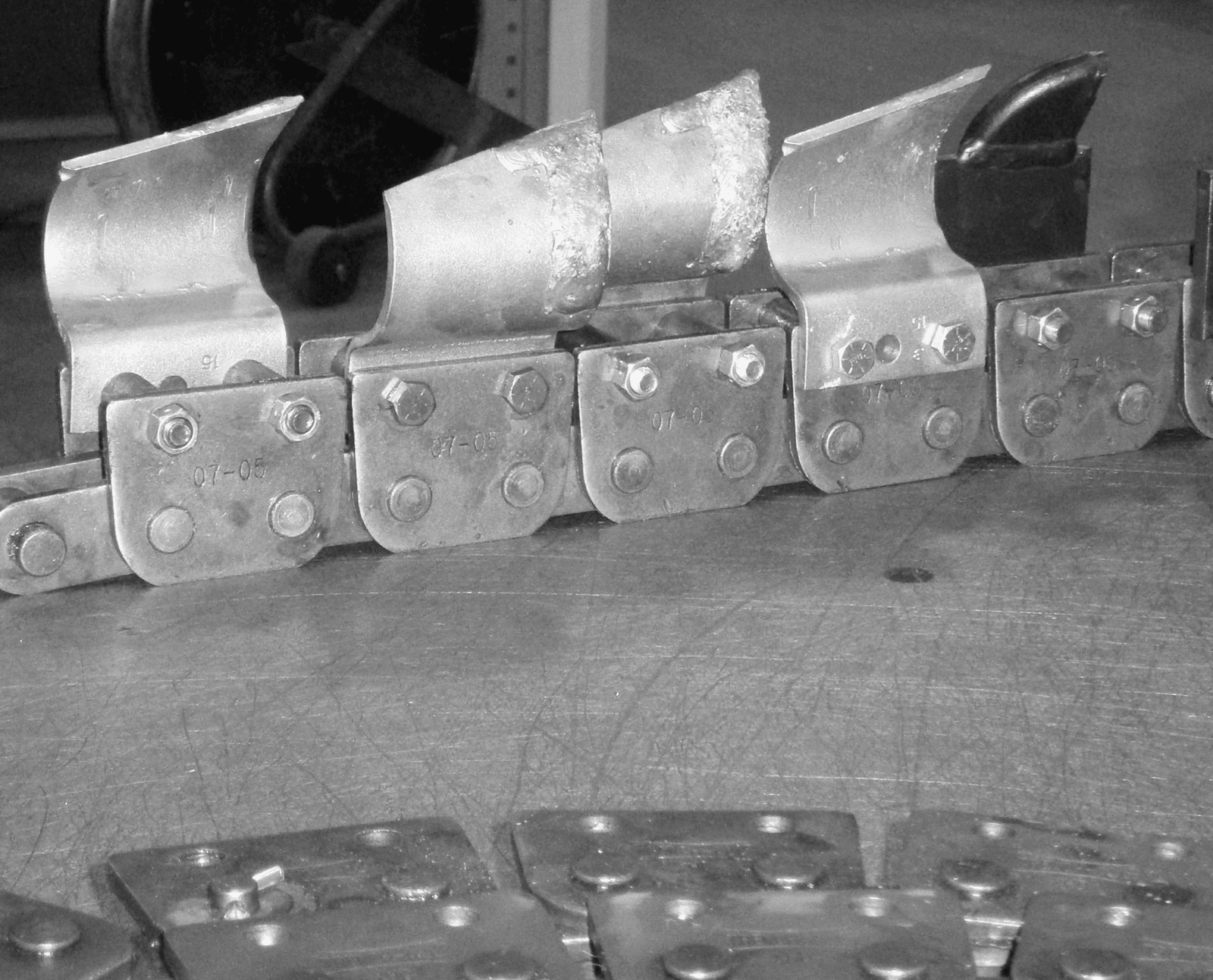
Look for stamping on the chain body:
Ballantine chains feature clear identification marks. Different manufacturers use various stamping locations, so examine multiple stations, on both sides of the chain.
Identify your trencher’s make and model
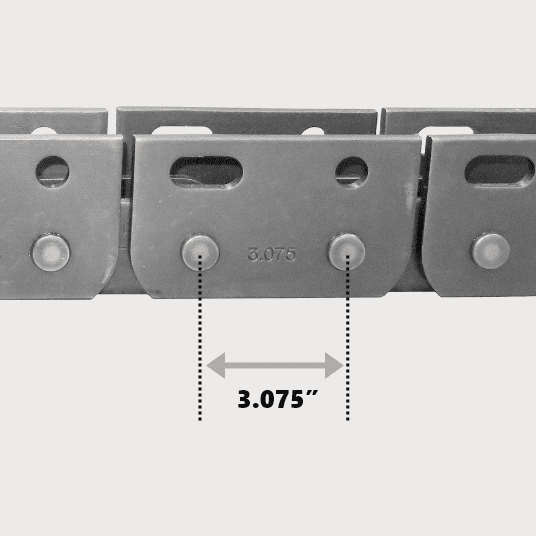
Measure the pitch size (center of pin to center of next pin)
Count the number of stations
Identify the attachment spacing (2-pitch or 4-pitch)
Determine your chain type & style (cup, combo, bolt-on, welded)
Note the cutter/tooth type currently installed
LET’S LOOK AT EACH STEP IN MORE DETAIL
1
Make & Model of Your Trencher
Start with your machine’s manufacturer and model number. Ballantine manufactures trencher chains compatible with leading brands including Vermeer®, Ditch Witch®, Barreto®, Ground Hog®, Astec®, Case®, Trencor®, Tesmec®, Burkeen®, Bobcat®, Digga®, and Paladin®.
Where to find it:
Check your equipment’s identification plate or owner’s manual.
2
Pitch Size
Pitch measures the distance from the center of one pin to the center of the next pin. Common pitch sizes include:
- 1.250”
- 1.500”
- 1.654”
- 2.000”
- 2134M
- 2.609”
- 2.648”
- 2.650”
- 3.067”
- 3.075”
- 3.110”
- 3.125”
- 3.250”
- 3.300”
- 3.990”
- 4.086”
- 7600M
- 2109K
- 4501K
- 4502K
- 4525K
- 7600K
How to measure:
Use a tape measure or caliper to measure center-to-center between adjacent pins on your current chain.

3
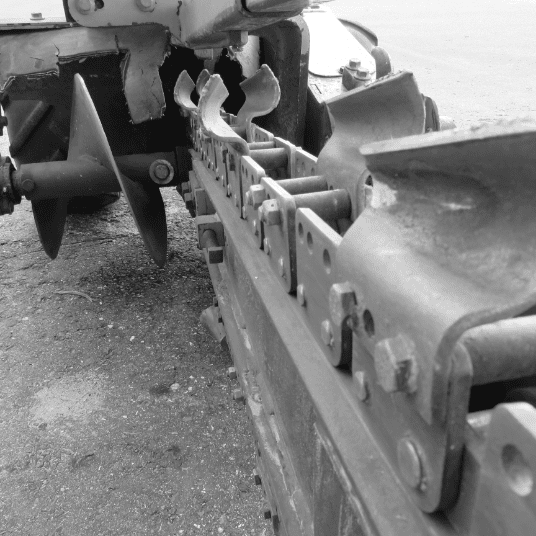
Number of Stations and Pitch Count
Count the total number of pins in your chain assembly to get your pitch count. To determine the number of stations, count the number of attachment points (see the example depicted above).
Important note:
Just because your chain currently has 37 stations doesn’t mean it originally came with 37. Operators sometimes remove links as chains wear and “stretch” (elongate due to component wear). If you’re unsure whether a link was removed, please mention this when ordering.
4
Attachment Spacing
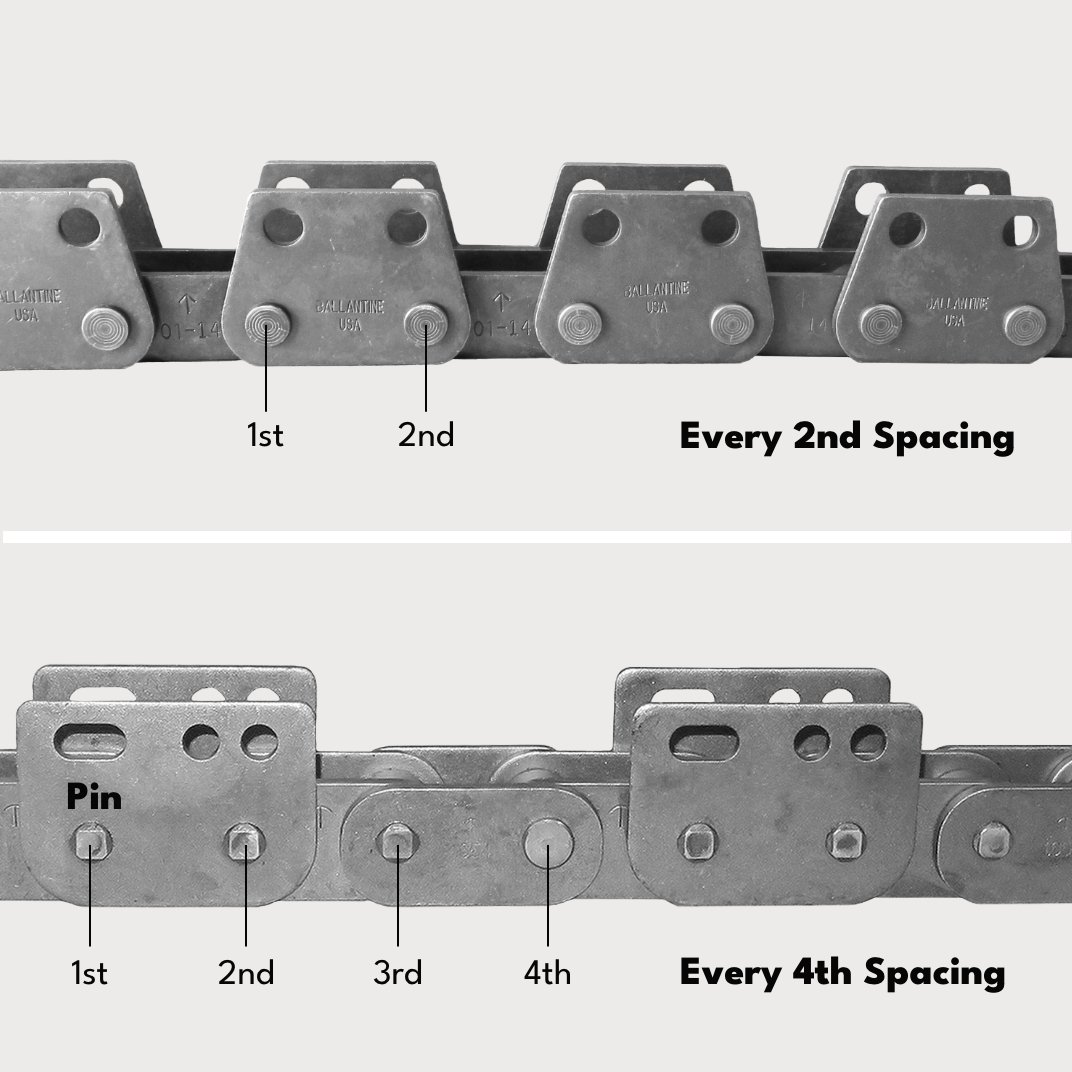
Trencher chains use either every 2nd or every 4th attachment spacing, which determines how frequently cutters are mounted along the chain.
- Every 2nd Spacing: Attachments every second pitch (more cutters, better for varied conditions)
- Every 4th Spacing: Attachments every fourth pitch (fewer cutters, economical for softer soils)
5
Chain Type and Style
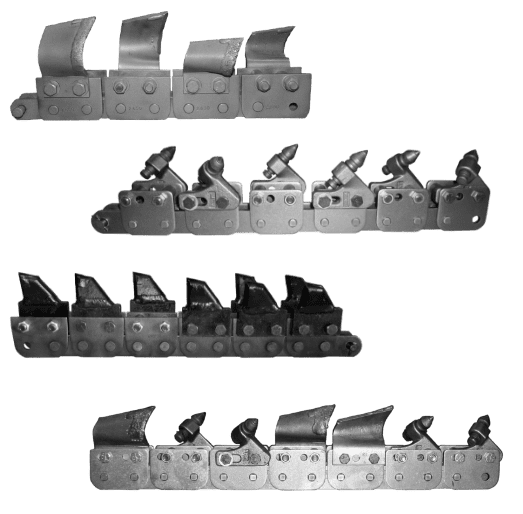
Ballantine offers several trencher chain assembly configurations:
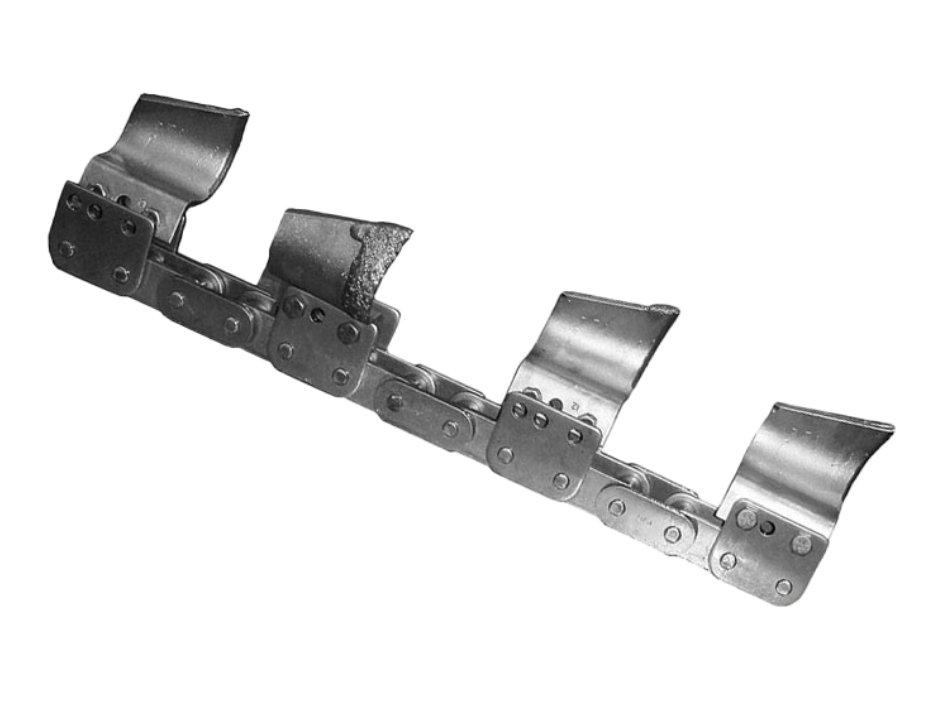
Cup Assembly (Every 4th Spacing)
Best for heavy/wet and sandy soils. Economical option for softer ground conditions.
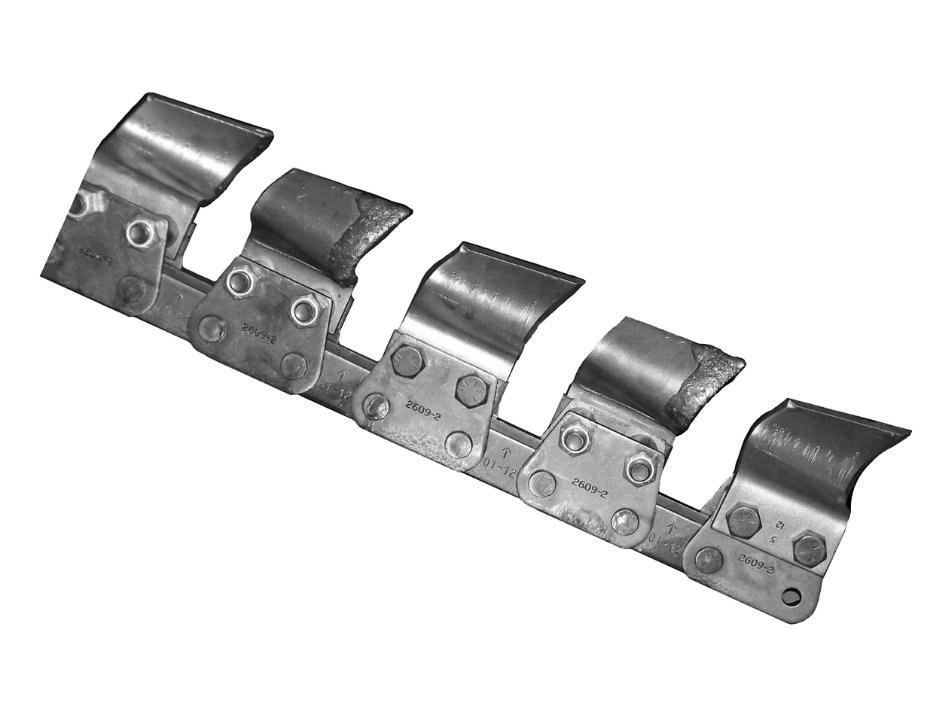
Cup Assembly (Every 2nd Spacing
Versatile choice for sandy through medium-hard soils. More cutters provide better performance across varied conditions.
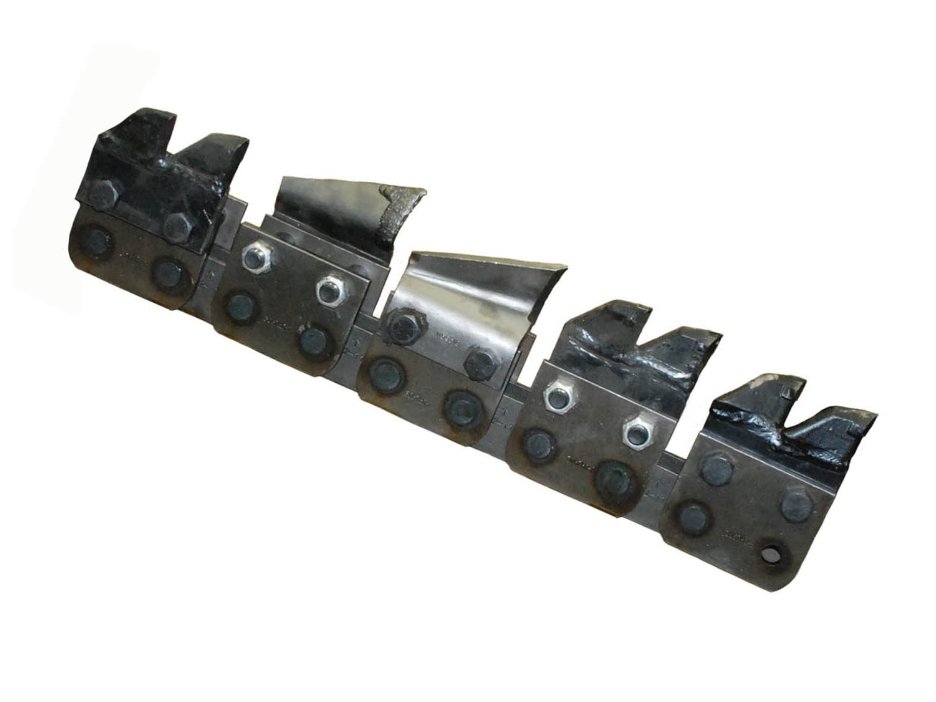
Combination Terminator/Cup
Excellent all-around system. Terminator carbide teeth handle tough center sections while cup cutters remove spoil and maintain clean sidewalls. Recommended for loose dirt through rocky conditions.
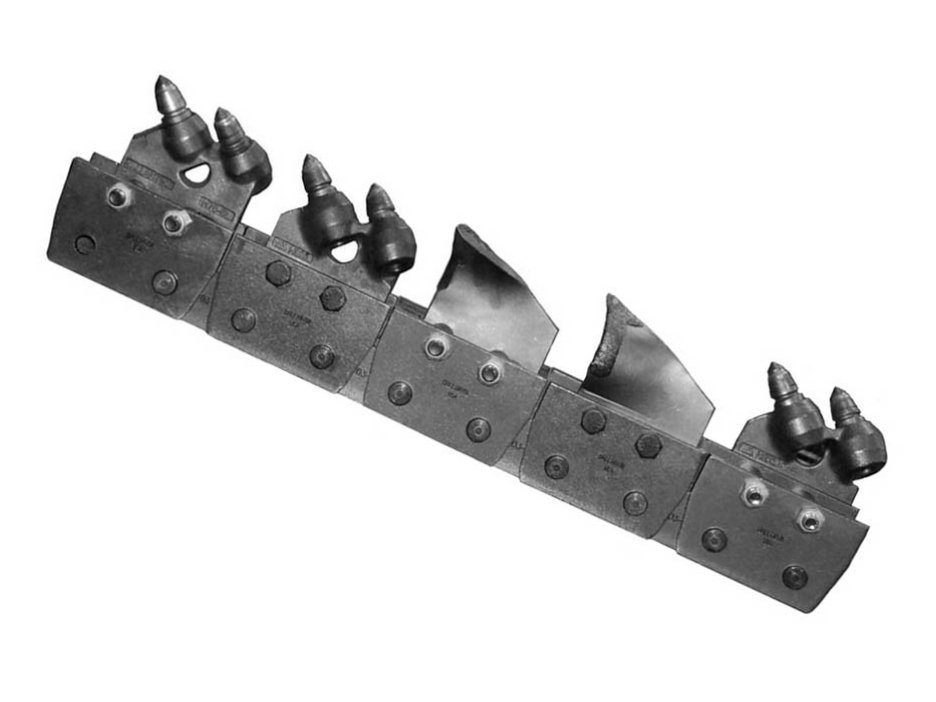
Combination Rock & Frost/Cup
Similar benefits to Terminator/Cup combination, suited for medium through rocky terrain. Easy to replace conical carbide bits.
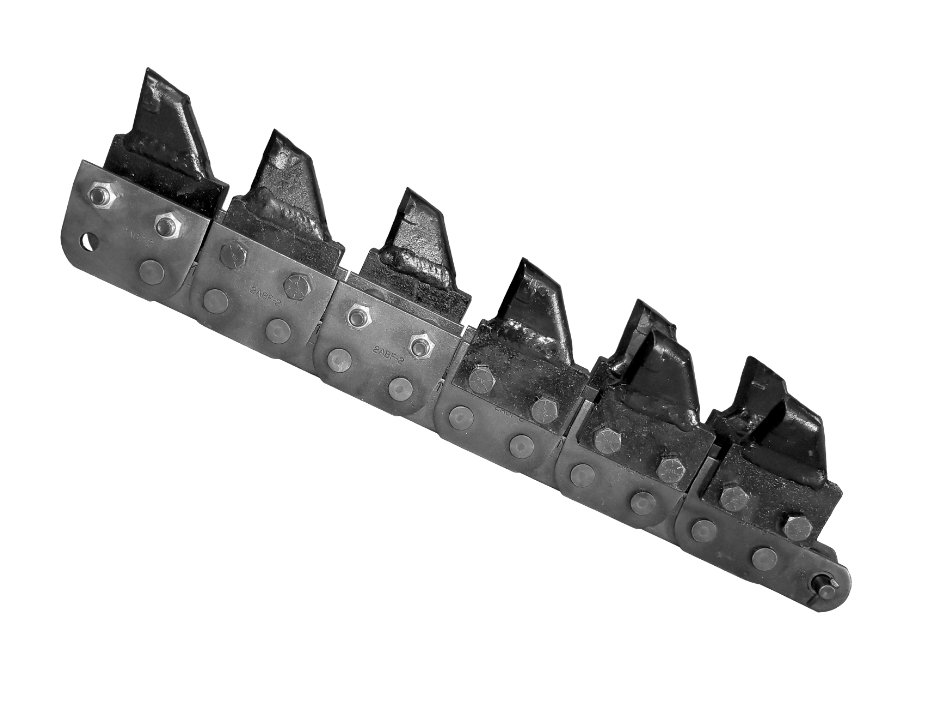
Full Terminator (bolt-on)
Premium choice for hard and rocky soil. Allows efficient tooth pattern changes and cutter adjustments.
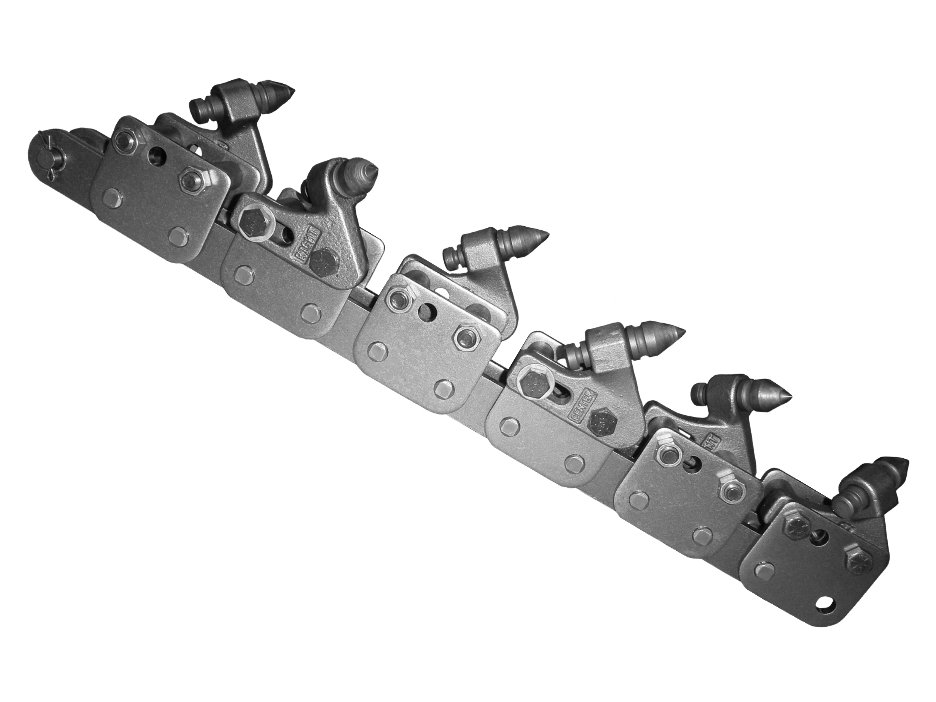
Full Rock & Frost (bolt-on)
Maximum durability in the toughest ground conditions, including hard soil and rocky terrain. Easy to replace conical carbide bits.
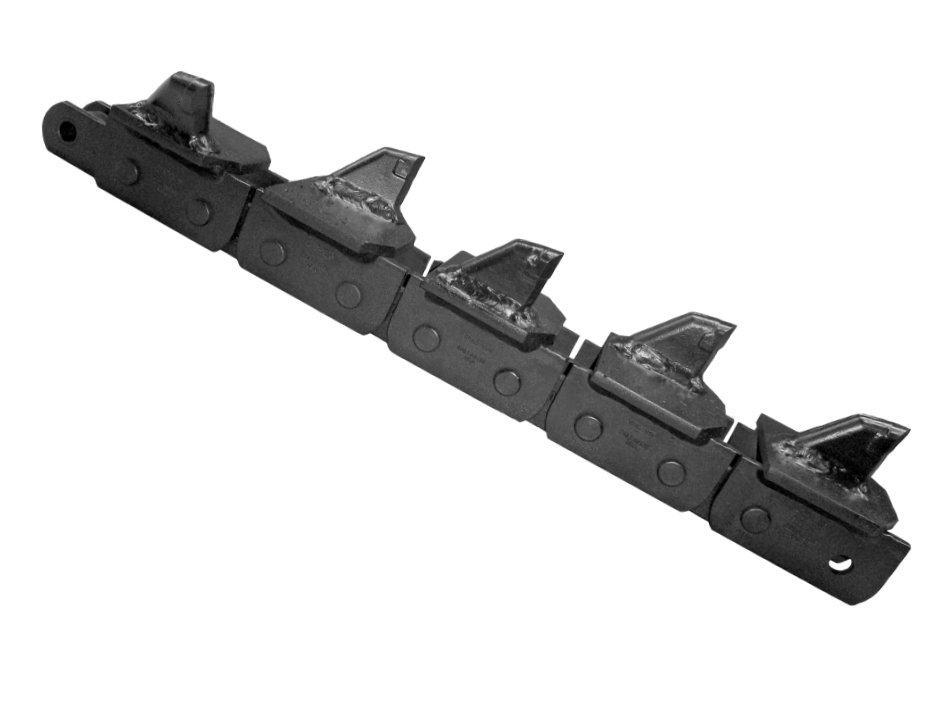
Welded Terminator
Low-profile design keeps carbide teeth closer to the power source, reducing kickback in hard ground. Teeth last the entire chain life (no replacement needed).
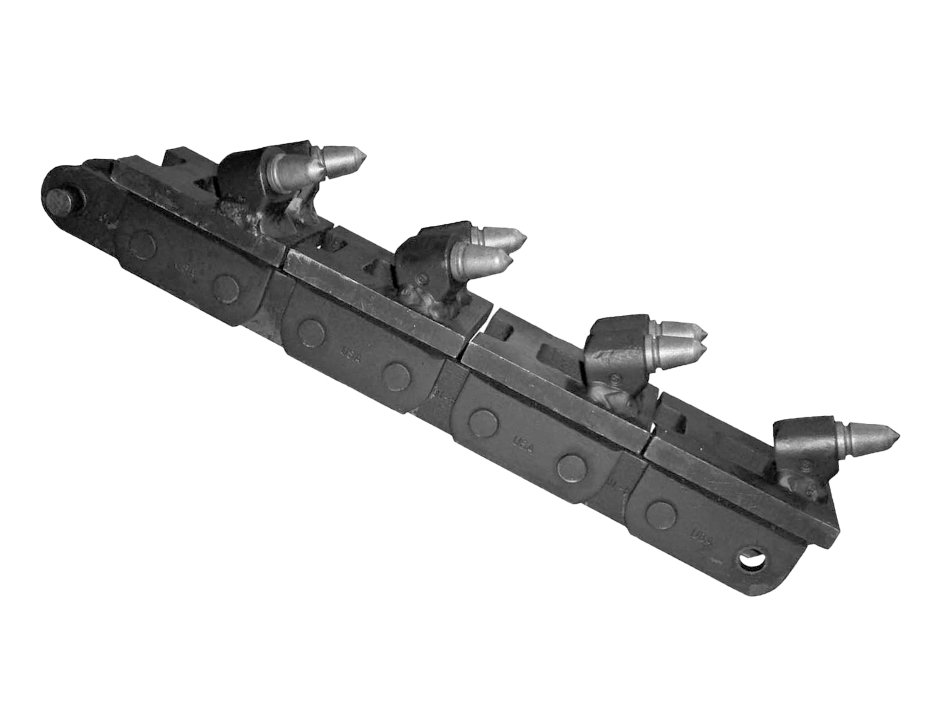
Welded Alligator
Durable carbide solution for hard and rocky conditions. Easy to replace conical carbide bits.
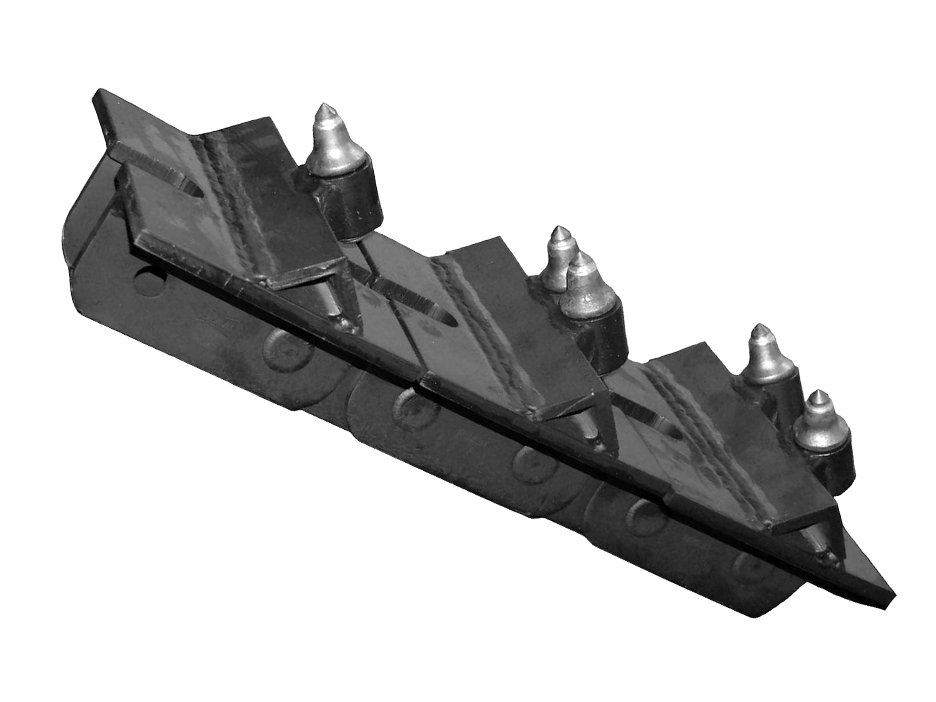
Welded H-Plate
Specialized configuration for demanding applications in hard and rocky soil. Easy to replace conical carbide bits.
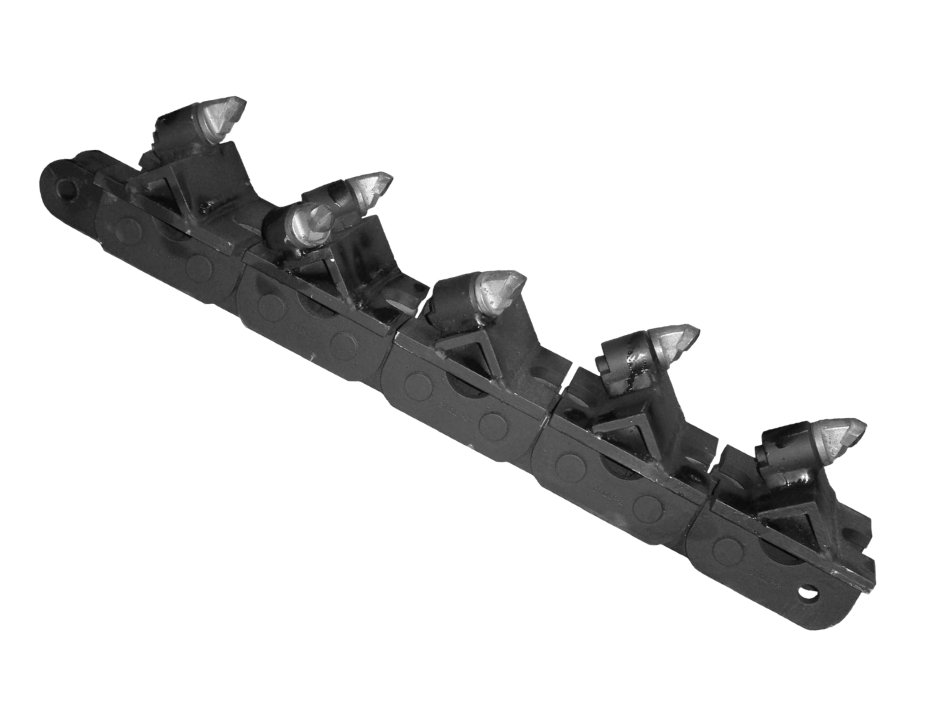
Innovator
For hard, rocky, coral and frozen ground conditions. Smoother ground entry reduces boom hop, cleaner rounded trench bottom. Easy to replace conical carbide bits.
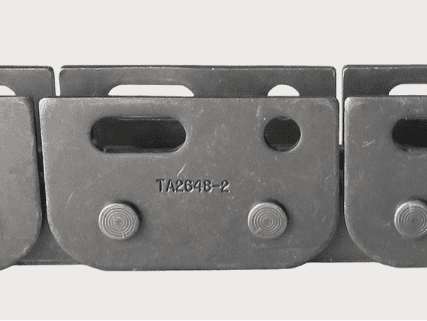
Anti-Back Flex (ABF) chains
Feature closely spaced side plates that give the chain beam-like rigidity, keeping cutters at the optimal attack angle for smooth cutting and maximum tooth life.
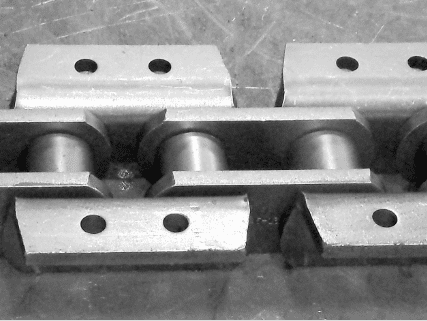
K-Style chains
Distinct configuration visible when viewing chain profile.
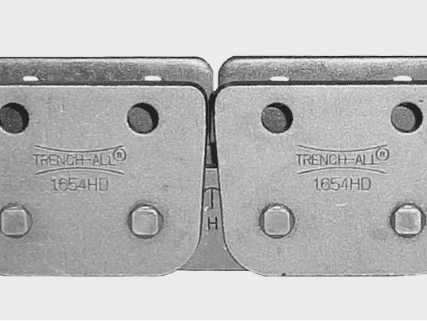
Trench-All® chains
Ballantine’s patented premium chain line featuring raised rivets and extended attachment slide areas for longer wear life.
6
Cutter/Tooth Type
Different cutter styles are best for different soil conditions:
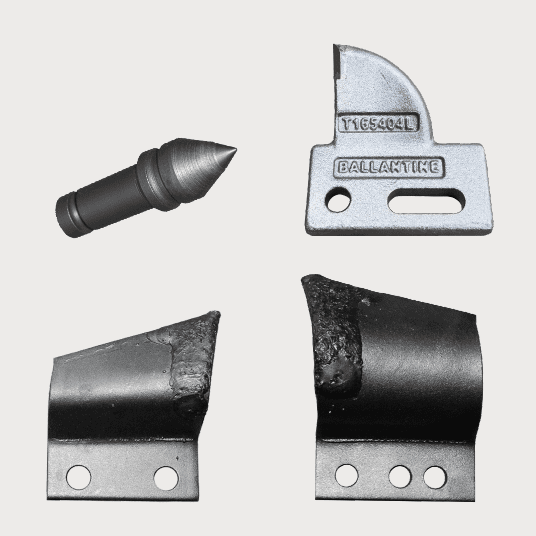
- Terminator® Teeth: Ballantine’s brand name for high-performance carbide cutting teeth. The industry often refers to these as “shark tooth” style cutters.
- Cup Cutters: Traditional bolt-on style for softer to medium soils.
- Carbide Conical Bits: Carbide options for tough conditions.
Common industry terminology:
You may hear trencher chain assemblies referred to by their cutter type: “shark chain” for Terminator assemblies, or “carbide chain” for Rock & Frost assemblies.
MATCHING CHAIN ASSEMBLIES TO GROUND CONDITIONS
Choosing the right trencher chain assembly depends heavily on soil type. This chart provides recommendations for various ground conditions:
| Soil Type | ||||||
|---|---|---|---|---|---|---|
| Wet Soil | Sandy | Soft Soil | Medium Soil | Hard Soil | Rocky Soil | |
| Cup Cutter Chain Assembly - Every 4th | ||||||
| Cup Cutter Chain Assembly - Every 2nd | ||||||
| Terminator Cup Combo Chain Assembly | ||||||
| Rock & Frost Cup Combo Chain Assembly | ||||||
| Bolt On Terminator Chain Assembly | ||||||
| Welded Terminator Chain Assembly | ||||||
| Rock & Frost Chain Assembly | ||||||
| Alligator Chain Assembly | ||||||
| H-Plate Chain Assembly | ||||||
| Innovator Chain Assembly | ||||||
Ground Condition Definitions
- Wet Soil: Clay, Gumbo or any soil with high levels of moisture
- Sandy: Loose Sand, Sandy Loams or any that is predominately comprised of sand
- Soft Soil: Loams, Clay, Silt, Soft to medium soils that contain moisture
- Medium Soil: Consolidated Loams & Clays, Semi-compacted soils
- Hard Soil: Hardpan, Gumbo, Compacted Dry Soils, Frozen Ground
- Rocky Soil: Cobble, Chunk Rock, Gravel, Glacial Till (any non-consistent type of rock)
Trencher Chain Identification: Photo Upload
When ordering, make sure to provide clear photos of your current chain assembly.


BALLANTINE CHAINS DELIVER SUPERIOR VALUE
Ballantine trencher chains are manufactured in the USA to meet or exceed OEM specifications. Here’s what sets them apart:
Engineered for Extended Life
Ballantine chains feature more steel, closer tolerances, and no backlash for smoother operation and less equipment wear. High carbon alloy material with thru-hardened heat treatment extends chain life. The rigid chain design keeps cutters at proper attack angles.
Complete System Design
Ballantine manufactures chains, sprockets, and rollers to work together as engineered systems. Components are designed to wear together, maximizing useful life. This differs from lower-cost alternatives that source components from unrelated factories.
Superior Materials and Construction
Key Ballantine chain features include: specially hardened alloy steel attachment side plates and roller link side plates with offset design for longer wear life; hardened alloy steel rollers; riveted chain pins throughout the body; specially produced alloy steel connector pins formed to press fit into side plates for greater fatigue strength; and anti-back flex side plates that provide beam-like rigidity.
WHAT YOU NEED, WE DELIVER.



TRENCHER CHAINS FAQ
How many stations does my chain need?
Your chain needs the same number of stations it was originally designed to have. To determine this:
- Check your trencher’s specifications or owner’s manual for the original station count
- Count the stations on your current chain as a starting point
- Indicate to Ballantine whether you’ve removed any links from your current chain
Tip From The Trenches – Chains don’t actually “stretch”; what appears as elongation results from wear creating slop between components. Operators sometimes remove links to compensate for this wear. When ordering, make sure to indicate whether you’ve removed links. If you’re unsure, answer “I don’t know” so our team can help verify the correct original length for your machine.
What chain assembly should I use for my ground conditions?
Match your soil type to the ground conditions chart above. For mixed conditions or uncertainty, combination chains (Terminator/Cup or Rock & Frost/Cup) offer the best versatility. If you work in particularly demanding conditions like frozen ground, hard rock, or abrasive soils, consider upgrading to Anti-Back Flex (ABF) chain styles regardless of cutter configuration.
Do I need to replace sprockets when I replace my chain?
Yes, because you achieve longer life from your chain, sprockets, and overall trencher when you replace the chain, sprocket, and roller simultaneously as a complete set. Ballantine manufactures these components to work together, engineered so all parts wear at the same rate. If you install a new chain on worn sprockets, the worn sprocket teeth create “hot spots” that accelerate chain wear and reduce the life of your new chain investment.
What is chain tensioning and when does it matter?
As chain components wear, they create slack (commonly called “stretching,” though the chain isn’t actually elongating; the wear between pins and bushings creates play). This affects:
- Cutting efficiency: Loose chains don’t hold cutters at optimal angles
- Equipment strain: Excessive play increases boom and component stress
- Safety: Improperly tensioned chains can derail
When ordering replacement chains, mention your current chain’s condition. If you’ve been adjusting tension frequently or removed links, this indicates significant wear, and the new chain may require a different station count than your worn chain currently has.
GET EXPERT GUIDANCE ON CHOOSING THE RIGHT TRENCHER CHAIN
Ballantine has supplied trencher chains to the construction industry for over 65 years. We understand the variables and provide personalized support to match you with the right trencher chain assembly. Fill out this form and we’ll get back to you with a quote.
CONTACT BALLANTINE
Email:parts@ballantineinc.com
Phone (US only):800-328-2424
Phone (International):763-427-3959